Video Production
How Much Does Video Production Cost in Toronto?
An outline of the cost article. The structure and the cost factors are settled. The published rate bands are not, because they have to come from Rosa's real quoting history rather than a guess.
- Author
- By Rosa Park
- Published
- Updated
- Reading time
- 6 minute read
The short answer
The cost of a video in Toronto is driven by five things: how many filming days it takes, how many locations are involved, how many people are needed on set, how complex the edit is, and how many finished versions you need at the end. This article is an outline until real rate bands are confirmed.
Before this can be published
- Rosa's actual starting price or typical range for a single-location interview video.
- Rosa's actual range for a multi-location brand film or mini documentary.
- Whether day rates or project rates are quoted, and whether a minimum booking applies.
- Whether travel outside the GTA is charged as a flat fee, per kilometre, or built into the project rate.
- Confirmation that any range published here matches what is actually quoted, so the page never sets an expectation a quote then contradicts.
Planned structure
- Direct answer in the first paragraph: a range, and the one sentence that explains why the range is wide.
- The five cost drivers, one short section each: filming days, locations, crew size, edit complexity, number of final versions.
- What a lower-cost project actually looks like, described concretely rather than as a tier name.
- What a higher-cost project actually looks like, and what the extra money buys.
- What is usually excluded and gets quoted separately: music licensing beyond a standard licence, motion graphics, translated subtitles, additional revision rounds, paid actors, location fees, travel outside the GTA.
- How to get a quote that will not move: the four things to tell a videographer before asking for a number.
- Frequently asked cost questions, answered in two or three sentences each.
The five cost drivers
These are settled and do not depend on Rosa's rates. Each becomes a short section with a concrete example rather than a general statement.
- Filming days. A day is the unit most video is priced in. Two half days in different weeks cost more than one full day, because each one carries setup, travel and packing down.
- Locations. Every additional location adds moving time, a new lighting setup and a new sound environment. Three locations in one building is one problem. Three buildings is a different one.
- Crew. One person filming keeps a room calm and keeps the price down. A second camera, a sound recordist or a lighting assistant each add cost and each solve a specific problem, so the question is which problem you actually have.
- Edit complexity. A talking-head cut with captions is a different job from a documentary with archive footage, motion graphics, sound design and a full colour grade. Edit time, not filming time, is where most of the budget difference sits.
- Final versions. One horizontal master is one deliverable. A master plus three vertical cutdowns, a fifteen second version, a captioned version and a silent social version is six, and each needs its own pass.
What to tell a videographer before asking for a price
- What the video has to do, in one sentence, and where it will be published.
- Who is on camera, and whether they are available on a weekday.
- How many locations, and whether you control access to them.
- The date it has to be live, and whether that date can move.
Those four answers are usually enough for a written quote rather than a range. If you have them, contact us and you will get one.
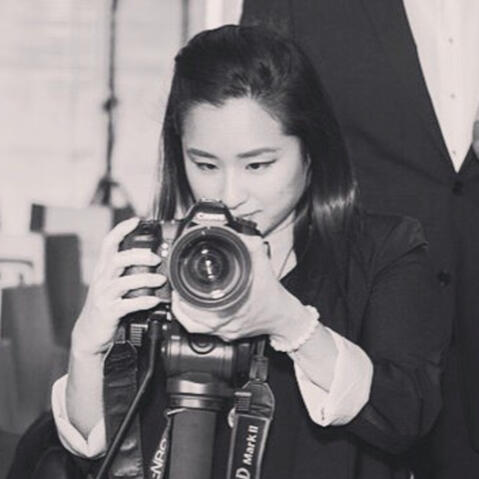
Written by
Rosa Park
Rosa films and photographs everything on this site herself. She works on corporate and documentary video across Toronto and the GTA, and on real estate and lifestyle photography around Bancroft. More about Rosa.
Services this guide relates to
Video Production
Video production covering pre-production, filming and editing for organizations across Toronto and the Greater Toronto Area.
Corporate Video
Video made for an organization's own communication: brand films, company profiles, recruitment, training, internal messaging and product explainers.
Mini Documentaries
A short documentary film built from research and real interviews rather than a script read to camera, usually five to fifteen minutes long.
Related articles
- Corporate Video
Corporate Video Production Timeline: What to Expect
How long a corporate video actually takes, stage by stage, and where the delays come from.
6 minute read
- Interview Production
How to Prepare for a Corporate Video Interview
Practical preparation for anyone being filmed for a company video: what to think about, what to wear, and what to stop doing.
7 minute read
- Video Production
Website Video: What Businesses Should Film First
If you can only make one video for your website this year, this is the one to make and where to put it.
8 minute read
Contact us about your project
If this guide left a question unanswered, ask it. A short reply is usually faster than reading three more articles.