Interview Production
How to Prepare for a Corporate Video Interview
Practical preparation for anyone being filmed for a company video: what to think about, what to wear, and what to stop doing.
- Author
- By Rosa Park
- Published
- Updated
- Reading time
- 7 minute read
The short answer
Prepare three ideas, not a script. Know the single sentence you want a viewer to remember, choose clothing in a mid-tone solid colour, and get the questions in advance so nothing on the day is a surprise. Do not memorise answers: memorised answers are visible on camera and they are the main reason people look uncomfortable in corporate video.
Almost everybody is nervous about being filmed, including people who present for a living. The nerves are not the problem. The problem is what people do about the nerves, which is usually to over-prepare, write out answers and then try to recall them under a light. This is a short guide to preparing in a way that actually helps.
A week before: decide what the video is for
Before you think about answers, write one sentence: what should a viewer be able to say after watching this. Not three sentences. One. Everything else in the interview is either supporting that sentence or it is cuttable.
Then pick three ideas that support it. Three is the number because it is roughly what a viewer retains, and because it gives an editor enough material to build a two minute piece without padding.
Ask for the questions in advance. Any videographer running an interview-led piece should send them, and if they will not, that tells you something. On our interview video projects the questions are agreed before the filming date, so the session is a conversation rather than a test.
What to wear
- Mid-tone solid colours. They sit comfortably between the brightest and darkest part of the frame and need no compromise in the lighting.
- Avoid pure white and pure black. White clips to a flat blank patch, black loses all its detail, and both force a lighting choice that then affects your face.
- Avoid tight patterns: fine stripes, small checks, herringbone. They shimmer on video, and no amount of editing removes it.
- Avoid a logo you may regret. Branding on your clothing dates a video and limits where it can be reused.
- Bring a second option in a different colour. It costs you nothing and it saves the shoot when the first choice fights the background.
- Jewellery that moves makes noise. A bracelet against a table is audible on a lapel microphone even when you cannot hear it in the room.
The morning of
- Drink water, and keep drinking it. A dry mouth is audible and it is the single most common audio problem in interviews.
- Eat something. Low blood sugar reads on camera as flatness.
- Skip the extra coffee. Caffeine on top of nerves produces a rushed delivery that has to be slowed down in the edit.
- Arrive fifteen minutes before you are needed. Walking straight from a meeting into a lit chair rarely goes well.
In the room
Expect the first twenty minutes to be setting up. Lighting, sound and framing take about forty minutes for a single interview, and the interesting part is that this is useful time for you. Talk to whoever is in the room. Get used to the light being there. By the time the camera rolls you should already be mid-conversation.
When filming starts, answer in full sentences that include the question. If you are asked what NERVE does and you answer it connects researchers, the clip cannot be used on its own. If you answer NERVE connects researchers across the province, it can. This is the single most useful habit for anyone being interviewed, and it costs nothing.
- Talk to the interviewer, not the lens, unless you are asked to do otherwise.
- Pause before answering. Silence is trimmed in the edit, and a pause gives you a clean cut point.
- If you fumble, stop and say the whole answer again from the top. Do not repair mid-sentence, because a repaired sentence is hard to cut.
- Say it your way. Every phrase that comes out of a communications document sounds like one on camera.
What not to do
- Do not memorise. Recall is visible around the eyes and it is the difference between someone speaking and someone reciting.
- Do not ask for a teleprompter by default. It has its uses for scripted messaging, but it makes interview answers sound read, which is the opposite of the point.
- Do not try to cover everything. An interview that touches eleven topics gives an editor nothing to build on.
- Do not watch the monitor between takes. It makes almost everybody self-conscious, and the frame is not your job.
After filming
Nominate one person to give notes on the edit, and have that person collect everyone else's notes first. Consolidated notes are one revision round. Five separate emails are five, and it is the most common reason a video project runs late. Our corporate video timeline covers how the review rounds usually fall.
If you are planning an interview-led piece in Toronto or the GTA and want the questions written before the filming day, contact us.
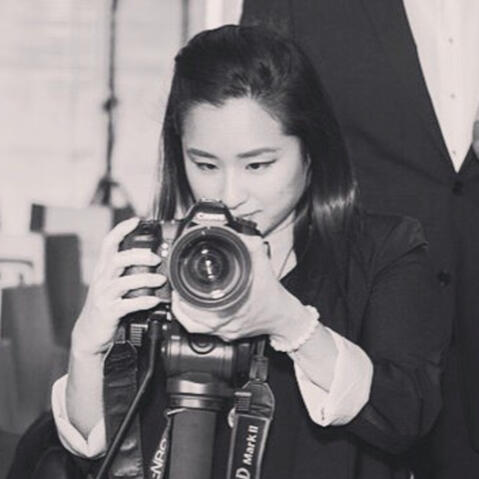
Written by
Rosa Park
Rosa films and photographs everything on this site herself. She works on corporate and documentary video across Toronto and the GTA, and on real estate and lifestyle photography around Bancroft. More about Rosa.
Services this guide relates to
Interview Video
A filmed conversation, lit and recorded properly, cut into a piece that lets one person explain something in their own words.
Corporate Video
Video made for an organization's own communication: brand films, company profiles, recruitment, training, internal messaging and product explainers.
Video Production
Video production covering pre-production, filming and editing for organizations across Toronto and the Greater Toronto Area.
Related articles
- Corporate Video
Corporate Video Production Timeline: What to Expect
How long a corporate video actually takes, stage by stage, and where the delays come from.
6 minute read
- Video Production
Website Video: What Businesses Should Film First
If you can only make one video for your website this year, this is the one to make and where to put it.
8 minute read
- Video ProductionOutline
How Much Does Video Production Cost in Toronto?
An outline of the cost article. The structure and the cost factors are settled. The published rate bands are not, because they have to come from Rosa's real quoting history rather than a guess.
6 minute read
Contact us about your project
If this guide left a question unanswered, ask it. A short reply is usually faster than reading three more articles.