Video Production
What Makes a Strong Mini Documentary?
The five things that decide whether a documentary short works, and the two mistakes that sink most of them.
- Author
- By Rosa Park
- Published
- Updated
- Reading time
- 8 minute read
The short answer
A strong mini documentary has a real question it does not already know the answer to, one person whose experience carries it, genuine access to the place where things happen, an edit that trusts silence, and sound that was taken seriously. The two most common failures are deciding the conclusion before filming, and trying to cover an entire organization instead of one specific thing inside it.
Documentary-style branded content is popular because audiences trust it more than advertising. That trust is easy to lose. A film that says it is a documentary and behaves like a commercial is worse than an honest commercial, because the audience notices the difference and resents it.
It starts with a question, not a message
A brand video begins with what we want to say. A documentary begins with something we do not know yet: why does this work, what does this person actually do all day, what happened when this changed. The film is the process of finding out.
This is the practical test. If you can write the last line of the film before filming, it is not a documentary. That is fine, but it should be commissioned as a corporate video, where it will be cheaper and better.
One person, not an organization
The strongest short documentaries are almost always about one person doing one thing. An organization is an abstraction and abstractions are hard to film. A researcher at a bench, a maker at a workshop table, a family running a business into its second generation: these are filmable, and the organization comes through anyway.
The instinct to represent everybody is what produces the eight-minute film that touches eleven departments and stays with none of them. Resisting it is most of the craft.
Access is the budget
The difference between a film with texture and a film without one is whether the crew was allowed into the room where the work happens. Not the boardroom. The bench, the kitchen, the shop floor, the truck at six in the morning.
- Agree access in the planning stage, in writing, including the awkward locations.
- Budget for more filming days than a scripted piece would need. Observational footage cannot be scheduled to the minute.
- Accept that some of the best material will come from a day that looked unpromising on the schedule.
- Prepare the people in those rooms. Being filmed at work is a different experience from being interviewed.
The research happens before the camera comes out
- Pre-interviews. Talk to everyone on the phone first, without a camera. This is where the actual story surfaces, and it is almost never the one in the brief.
- A narrative outline. Not a script. A sequence of what the film needs to establish, in order, with the gaps marked.
- A shot list built from the outline, including the observational sequences the outline implies but nobody has mentioned yet.
- A list of what could go wrong. Weather, access, one person becoming unavailable. Documentary schedules that assume everything holds tend not to.
Skipping the research is the shortcut that always shows on screen, and it is why documentary work runs to six to twelve weeks rather than three.
The edit has to trust silence
Corporate editing fills every second, because empty space feels like waste. Documentary editing does the opposite. A held frame, a pause before an answer, a shot of a room after somebody has left it: these are what make a piece feel observed rather than assembled.
- Cut the interviews first, on meaning alone, before any picture goes over them.
- Let a good answer run long rather than trimming it into a soundbite.
- Use music sparingly. Music that tells the audience how to feel is the fastest way to lose them.
- Resist the graphics. A statistic on screen is usually a sign the film could not make you care about it.
Sound does more than picture
Audiences forgive imperfect images and do not forgive bad sound. Location sound, room tone, the ambience of the place, a proper mix: this is where a modest budget is best spent, and it is the most reliable difference between a piece that feels considered and one that does not.
Two mistakes to avoid
- Deciding the ending first. If the film has to arrive at a predetermined conclusion, everybody on camera can feel it, and the answers get careful.
- Approval by committee. Documentary edits die in review when every stakeholder removes the one moment that made them uncomfortable. Nominate one reviewer with authority before the edit starts.
What you should expect to receive
- The finished film, usually five to fifteen minutes.
- A short social version, cut from the same material rather than trimmed from the full film.
- Captions and a subtitle file.
- A licensed music confirmation in writing.
- Stills pulled from the footage for use alongside the film.
If you have a story that might work as a documentary short, contact us and describe the person at the centre of it. That is usually enough to tell whether there is a film there. More on the approach at mini documentary production.
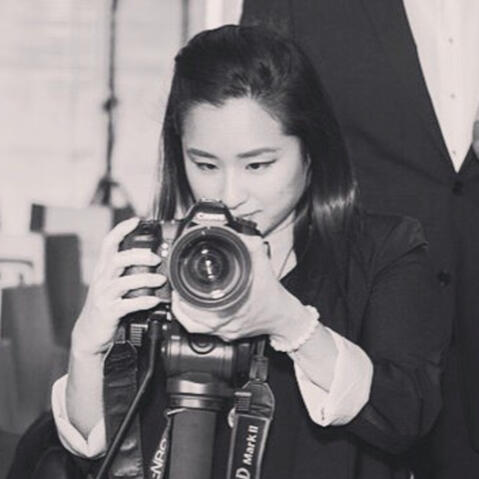
Written by
Rosa Park
Rosa films and photographs everything on this site herself. She works on corporate and documentary video across Toronto and the GTA, and on real estate and lifestyle photography around Bancroft. More about Rosa.
Services this guide relates to
Mini Documentaries
A short documentary film built from research and real interviews rather than a script read to camera, usually five to fifteen minutes long.
Interview Video
A filmed conversation, lit and recorded properly, cut into a piece that lets one person explain something in their own words.
Video Production
Video production covering pre-production, filming and editing for organizations across Toronto and the Greater Toronto Area.
Related articles
- Corporate Video
Corporate Video Production Timeline: What to Expect
How long a corporate video actually takes, stage by stage, and where the delays come from.
6 minute read
- Interview Production
How to Prepare for a Corporate Video Interview
Practical preparation for anyone being filmed for a company video: what to think about, what to wear, and what to stop doing.
7 minute read
- Video ProductionOutline
How Much Does Video Production Cost in Toronto?
An outline of the cost article. The structure and the cost factors are settled. The published rate bands are not, because they have to come from Rosa's real quoting history rather than a guess.
6 minute read
Contact us about your project
If this guide left a question unanswered, ask it. A short reply is usually faster than reading three more articles.